




Creating creature comforts for the creatures
Having reached adequate comfort for the pioneer family with the creation of the barnhouse, it was time to work on creature comforts for the livestock.
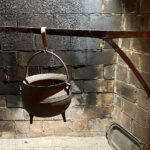
Completing the punch list before occupying the barnhouse
Once the the main log crib of the barnhouse was built, there were still a number of tasks to complete before it was ready to occupy through the winter.
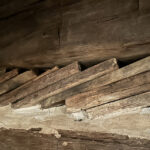
After the house raising, there was still plenty to do
Paul Locher continues the journey of early settlers in Ohio by detailing the work they did following a house raising in his latest An American Tale column.

Many arms (and legs) were required at a house raising
Paul Locher details the dangerous and exciting process of raising a house on the frontier of the Ohio Country in the 1800s.

It’s time to bring on the schnitzelbank
Paul Locher details the special tools early settlers required to construct sturdy roofs for their homes in Ohio and Pennsylvania in the 1800s.
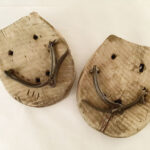
Preparing for construction was heavy, muddy work
Paul Locher details the special tools early settlers would have needed to start constructing buildings when settling in Ohio and Pennsylvania in the 1800s.
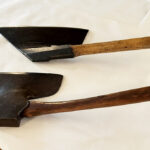
Bringing out the broadaxe and hewing to the line
Once early settlers had felled, sectioned and de-barked trees, it was time for the hewing process to begin, which required a broadaxe and a marking axe.
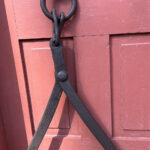
Trees: The settlers’ biggest nemesis and asset
In his latest installment of "An American Tale," Paul Locher explains how early settlers managed to fell trees to build shelters in Ohio and Pennsylvania.
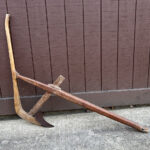
Early settlers’ decisions could mean life or death
After arriving and establishing a campsite, settlers had to deal with a trio of priorities immediately — clearing land, planting crops and building shelter.

You couldn’t pioneer without a felling axe
Paul Locher continues his "An American Tale" series by introducing readers to the most important tool used to open the American frontier — the felling axe.